Semantic Similarity
Nonlinear Group Research
and Documentation
The task was to produce a reader to end the research phase. 3 Groups of 2 Students were esearching one artist but 3 different sites. The difficulty of structuring what should be a free and creative research into a linear document felt limiting. Hierarchies when decidiing the narrative felt inevitable.
We decided to conceive a tool that would allow us to collect all fragments of the research and could be dynamically restructured according to interest.
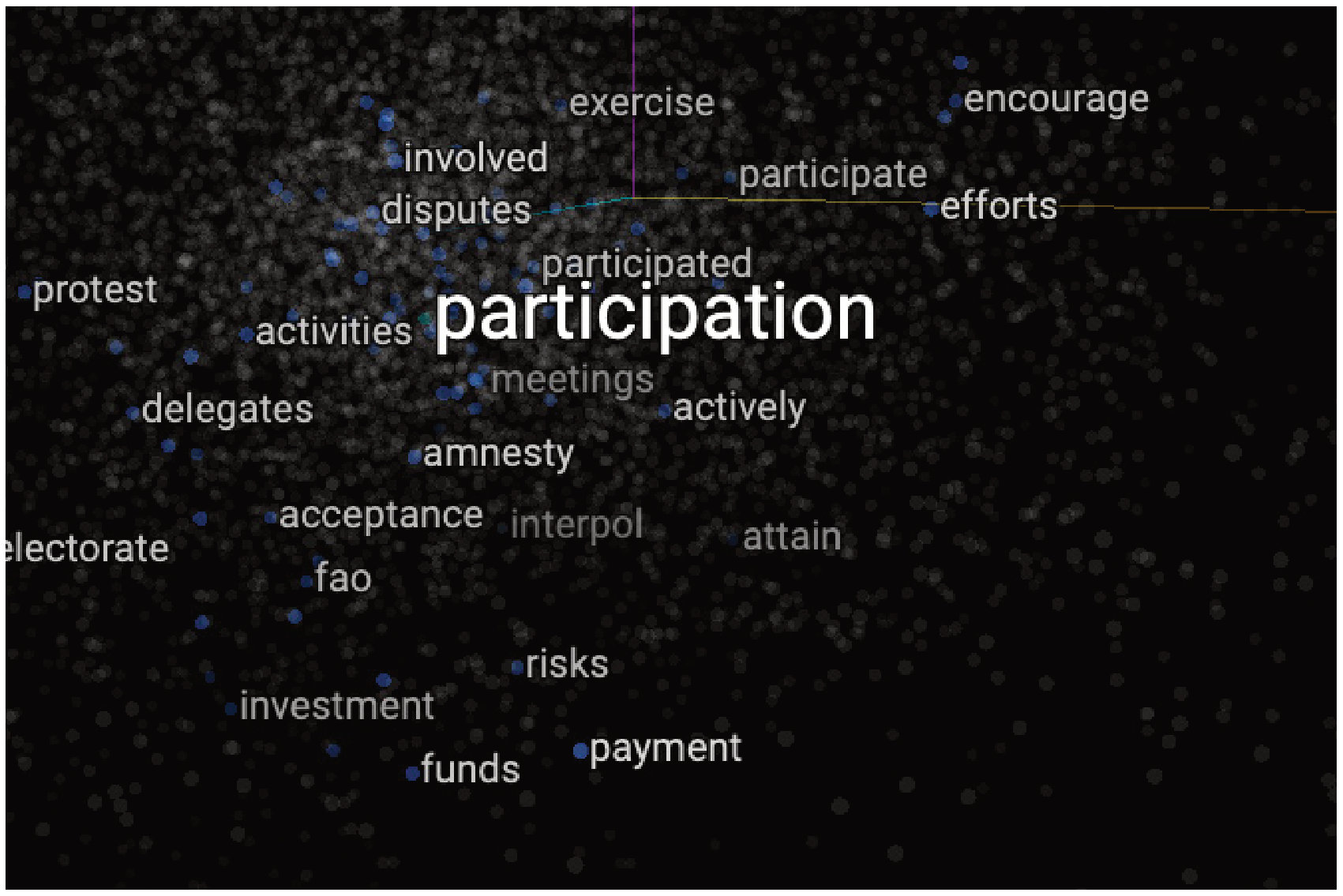
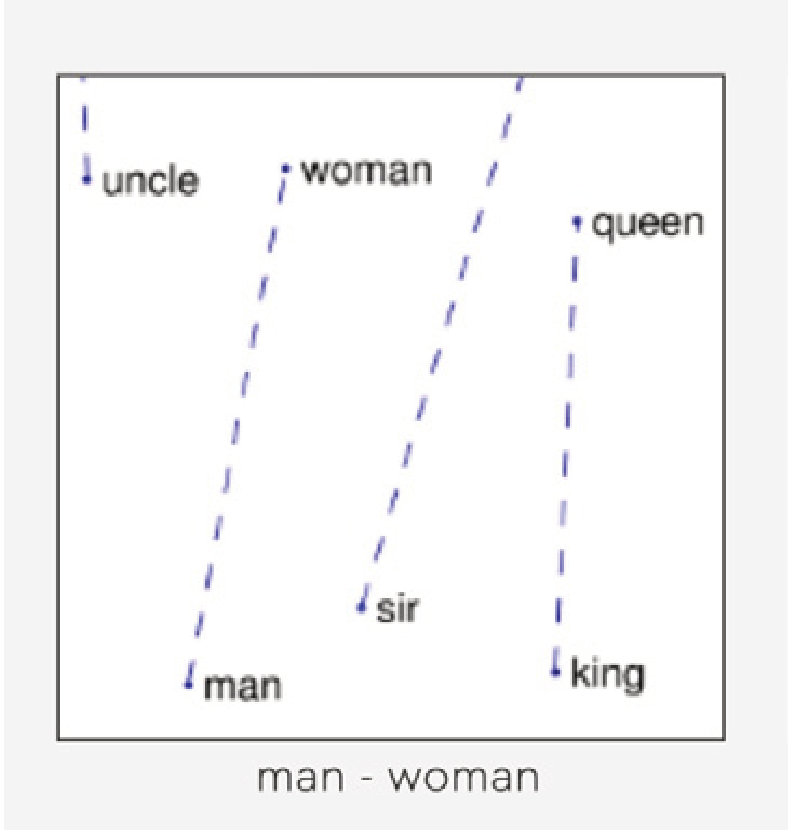
The code uses the GloVe Tensors, a pretrained linguistic vectorspace, where semantic meaning is embedded spatially.
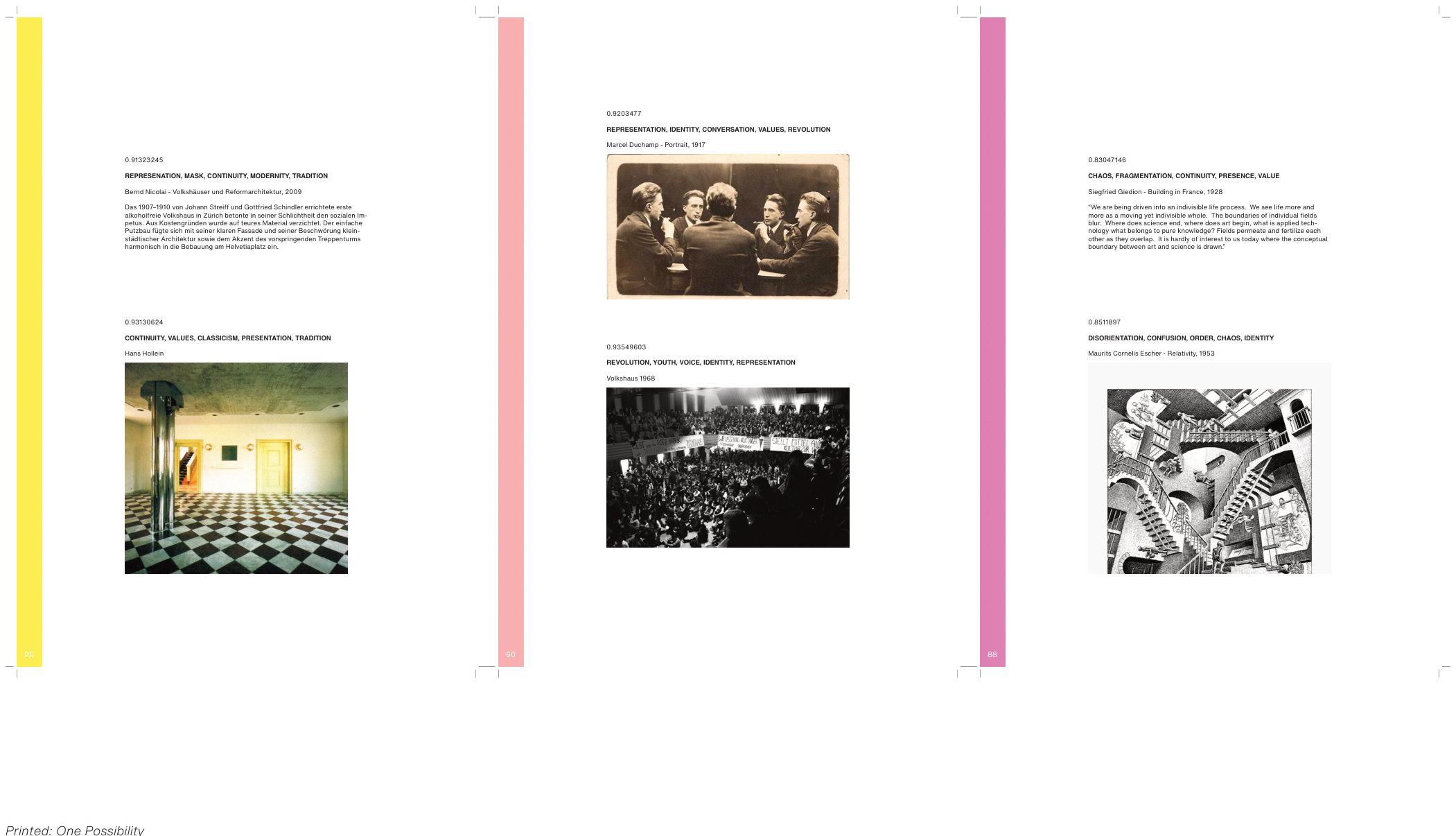
The researcher defines five words that capture the importance of the piece they add to the database. The five words per fragment are added and a single vector epresenting a location in space for each fragmentis found.

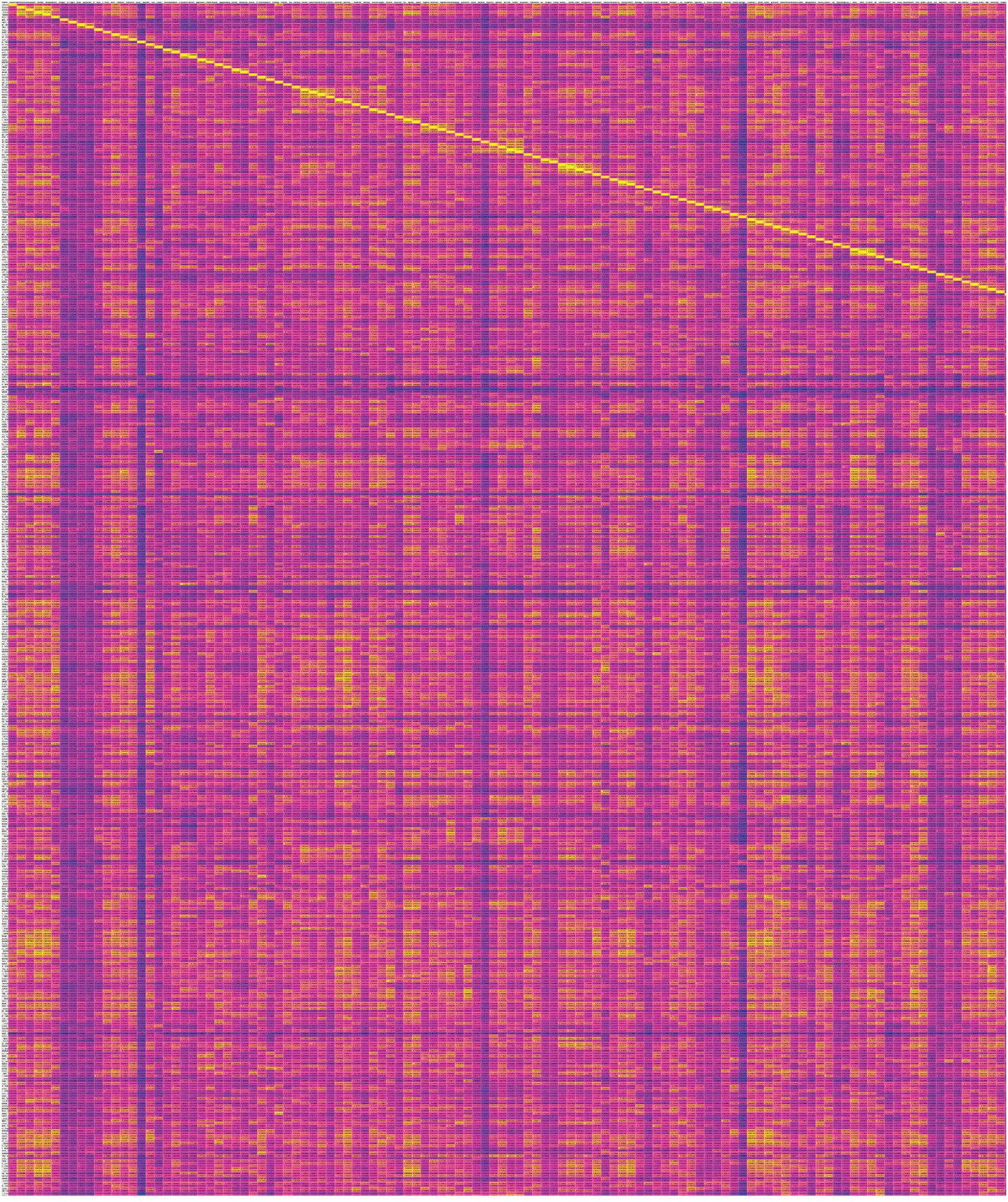
A cosine similarity operation finds their distance from eachother. It is performed between each possible pair in the database, and stored in the similarity matrix.
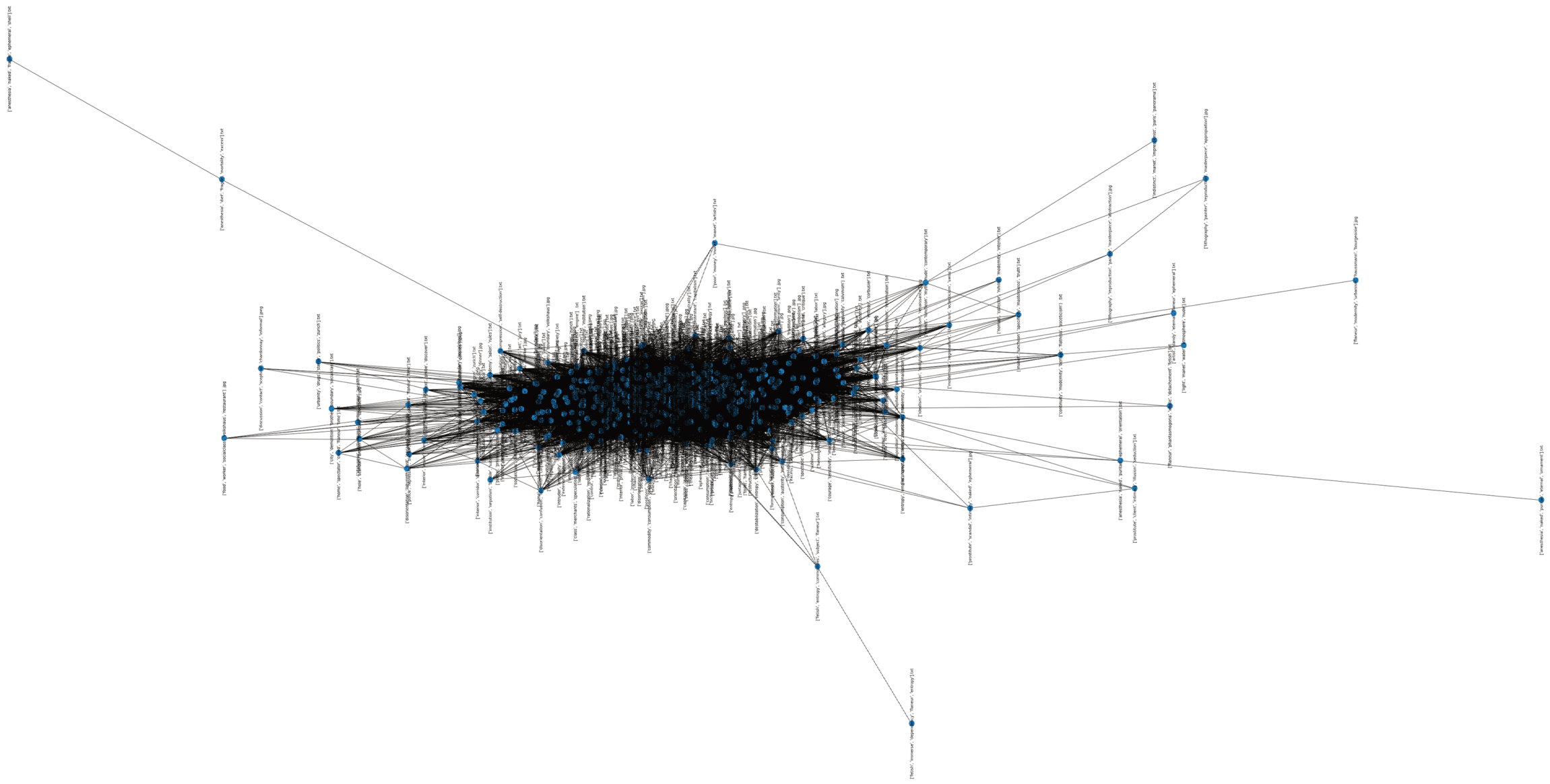
Now the body of research can be searched in many ways. For example by asking for the close friends of a single fragment, it will display which other fragments have the smallest distance.